Pages

Thursday, September 24, 2015

Stuck in the Slumber, Sorry Sculptor

The premise behind Gregory Funaro's The Sculptor is chilling and fascinating. A killer who uses humans as material to create masterpieces of art and has the ability to replicate the great work of Michelangelo is a rich idea with a lot of potential. Despite this intriguing idea, the writing style unfortunately was just not for me and I had a difficult time really getting into the novel.

I'm all for the use of repetition as a literary device, but I don't think the overly repeated words or phrases in this book were really going for that. There's chunks of dialogues where one character says another character's name over and over and it drove me crazy. Once I spotted it, I noticed it everywhere. In everyday conversation it would sound odd to keep saying someone's name like a broken record when you are talking to them.

I also had issues when the characters spouted off information like a textbook. I get that Cathy is an academic, but very rarely do I hear my professors talk like the textbooks they assign. Take this quote for example Cathy says, "The classical tradition in which Michelangelo's artistry is steeped-- that is, the humanistic tradition hearkening back to the ancient Greeks-- held that the male body was aesthetically superior to the female." This is just a small example because Cathy goes on to recite a huge chunk of information like this and I just did not believe she talked like that at all. It was too stiff and did not feel like an authentic person at all.

Oh and if I had a dollar for every time the word "pretty" was used I could probably be typing this blog post from a yacht right now. The women are pretty, I get it. Please stop using that descriptor
Bacchus
every time they are mentioned.

These things may seem small, but when they are happening over and over it makes it difficult for one to really get absorbed in the novel. Those things on top of characters without deep layers and depths just did not make a good combination for me. I wanted more than cliches from this novel, but I did not get there.

Christian AKA The Sculptor was so cliche with his super strength, bags of money, and not a care in the world...well except taking care of his father I suppose. I like my villains to have more weaknesses or downfalls than what was going on here. I guess in a way his obsessions, especially that concerning Michelangelo's art and recreating it, were downfalls, but I needed more to really be invested in this story. It just didn't feel like there was enough life breathed into the characters.

Again I will say the idea of a psycho killer obsessed with Michelangelo and using bodies as material for his artwork, the idea of awakening the world from their media-obsessed stupor, are spot on ideas that set up potential for a great novel, I just did not come away with that experience at the end of the novel.

Friday, September 18, 2015

The Church of Dead Girls: The Worship of Dark Desires

The Church of Dead Girls by Stephen Dobyns is a suspenseful book. The horror present in the text is both literary in nature as well as plain disturbing. I found myself repelled by the violent acts human being committed in the story, but I could not put the novel down. Dobyns does a masterful job of introducing various characters with shady traits, which makes the suspicion of whom the murderer is quite difficult to pinpoint until we start getting closer to the end. Every character in the book is flawed, but sometimes we are unsure of how deep those flaws run until more exposition takes place. There's a wonderful quote present in the text that describes the novels' characters perfectly:
"Just as we are only aware of the surface parts of one another’s minds, so are we only aware of the surface parts of one another’s behavior. We see the polite part, the public part, and we can only speculate on what exists underneath. But usually if the surface part is conventional and well-mannered, we assume the rest to be also. Although what does that mean? How can we assume that a person’s secret self is equally conventional and well-mannered? If the inoffensiveness of one’s public self is created by fear, then it would seem possible that one’s private self could be anything at all." -Dobyns, The Church of Dead Girls
This quote is so central to the events that occur. We are introduced to everyone's surface personality before their layers are peeled back and "what exists underneath" is revealed. In this novel what lurks beneath the superficial is quite dark for the most part. The narrator was of interest to me because for awhile I strongly felt he was withholding something from the audience, but I didn't feel it was threatening. I trusted him. Then we find out his secret is that he is gay, and given what horribly happens to Jaime in the novel, we can see why the narrator was not keen to divulge that information to everyone in town.

Other characters possess much darker secrets than a hidden sexuality however. Dobyns handles those secrets so well. We are absorbed in these characters and their unraveling lives. I constantly wanted to know more about how twisted Aaron might have been, more about Chihani and his purpose, more about the cops, citizens, IIR members...As events unfolded and the girls went missing, it became difficult to know whom to point the finger at. Dobyns shows that confusion by the unnecessary violence that chaotically happens throughout the story- Chihani's death for example. His interview with Franklin earlier in the book proved to be a bit prophetic:
"'Does one need a knowledge of the world, asked Franklin, to have a happy life? 'Not necessarily, but if one wants to raise oneself above the cows and the sheep, one needs knowledge. You will argue that cows and sheep have contented lives. I would argue that their ignorance leads to their slaughter. Actions have consequences. Ignorance about the nature of those actions does not free a person from responsibility for the consequences.'" -Dobyns The Church of Dead Girls
Chihani may have been brilliant at analyzing Marxism (I'd love to get into that even more, but maybe
for a future literary paper rather than going on and on in this blog post), but he was ignorant in his own way about how much his words and actions would piss off the people of this town. Other incidents caused by mob mentality were seen with Barry getting beaten up, Paul Leimbach almost dying plus the destruction of his house, and many more things. I thought our narrator was going to get beaten up as well by the Friends group who were just crazed in their obsessive need to point the blame at someone.

Another thing I found quite interesting about this novel was the ending. Donald Malloy has been found out and all of his perverse, dark secrets revealed. His psychopathy went deep and gave me goosebumps. He was a creepy fucker and it really did disturb me...but I think what stuck with me even more for some reason was the narrator's closing remarks about his own struggles. He stole Malloy's hand as a reminder of what could happen if he himself gave into his potential darkness. Would the narrator really end up like Malloy? The narrator does say, "How that sweetness must have sung to him and how insistent it must have grown as it led him to take more chances. Is it possible that voice exists in all of us but in most it is quiet? When I help a tenth grader with his biology assignment and I feel the heat of his body beside mine, the heat of his cheek, don’t I hear a sweetness calling to me? Of course, I do nothing. I move away or send the boy back to his desk, but sometimes I have fantasies. In my dreams I do things that I shouldn’t. But I am a good man. I have a respected position. I would never do anything wicked. But isn’t my fear one of the reasons I live alone? What do you do with your fear? And do you dream?"

This passage is disturbing because it blends together descriptions of the sickening Malloy with the narrator himself, and then it addresses "you" the audience as well. Does it suggest there's a wickedness in all of us? Perhaps it does, and I don't find it hard to imagine we all possess a sort of darkness within us. I suppose it just depends what we choose to do with that darkness if we act upon it all.
"If you could look to the bottom of a human being, what desires would you find?" -Dobyns, The Church of Dead Girls


Friday, September 11, 2015

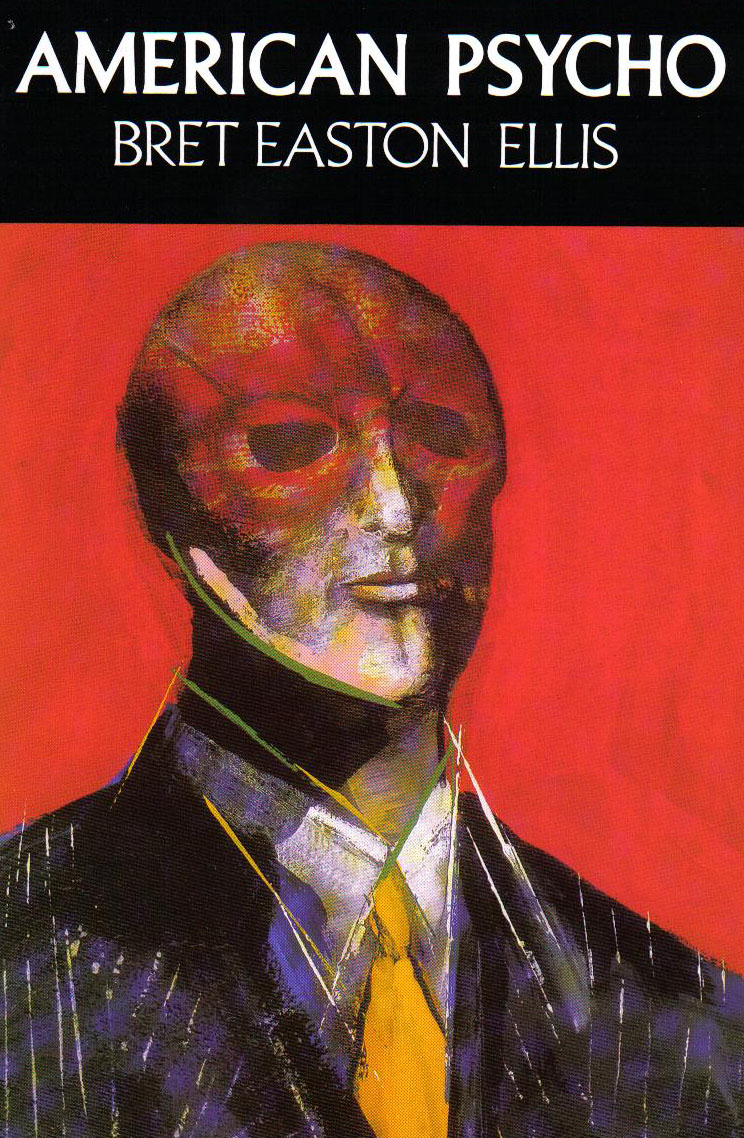
Hip to be Square...or a Psycho Killer


“...there is an idea of a Patrick Bateman, some kind of abstraction, but there is no real me, only an entity, something illusory, and though I can hide my cold gaze and you can shake my hand and feel flesh gripping yours and maybe you can even sense our lifestyles are probably comparable: I simply am not there.”  -Ellis,  American Psycho
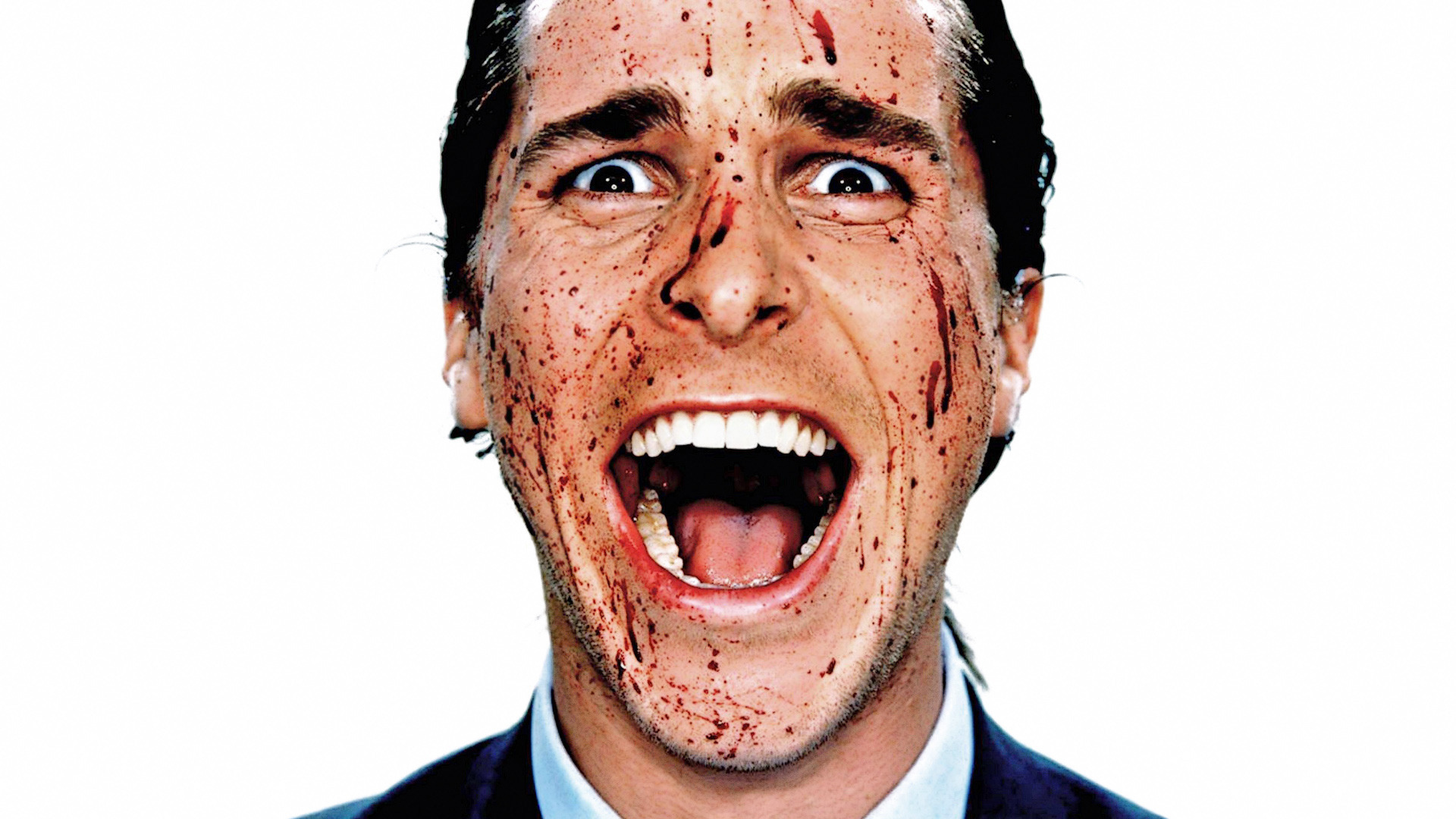
American Psycho, the movie version, is one of my favorite horror flicks. It's a violent, dark comedy that both disturbs and entertains me. Going into the novel, I expected I would love the book even more than the movie, but it turns out I was wrong.

Even though I had issues with the book, Bret Easton Ellis is a brilliant writer. There are not many authors that could pull this book off. It's clear extensive research was put into the story. The details Patrick Bateman gives the readers about the appearance of every person he meets, from the brand of ties or jewelry down to the brand of shoes, make it clear, sometimes painfully so, that a ton of thought was put into every detail. However, that many details made the book muddled to read. All those designer brands blended together, and even though I skimmed or skipped over many of those parts (and many of the side chapters that analyzed 80s music), it still seemed to take awhile for me to get through the book. I wanted more of Bateman's story, and it seemed to take awhile to really come together.

However, I will say Ellis obviously has a point to all those details. They serve to further prove the idea of materialism being so dominant in the book, especially given Bateman's job and Wall Street life, but I could have gotten that point just as clearly without the superfluous amount of detail. Bateman is a creepy bastard, and Ellis writes that aspect with careful cleverness, but even by the end of the book I was still unsure of how I really felt about Bateman's story.

In the movie version, while the violence toward women is disturbing, we are led to believe everything that happened had only occurred in Bateman's head, or at least that was how I always interpreted the part where Jean finds Bateman's appointment book filled with the graphic drawings of murder and other unpleasant things. The book, however, seemed to leave that idea open to even more interpretation. And the violence is so much worse. I'm usually not one to mind graphic gore so much, but there was something about the (again) over abundance of details for the horrific deaths of all the women that unsettled me. In a way I can see how Bateman's apparent murders of the women furthered the overarching theme, but sometimes it was just too much. Yes, I get the point that Bateman thinks of women as disposable possessions, just like his material items, but I didn't need quite that many details of what he did to their bodies to drive the point home.


Either way, the whole thing is disturbing as hell, so if overly graphic gore stuck in stream of consciousness narration is your thing, then this just might be your cup of tea. The dropped in mentions of Tom Cruise and Donald Trump interested me. Bateman is almost like the lovechild of the two with his movie star good looks, selfishness, and taste for the overly expensive business-centered life. Also, the fact that he worries so much about his health and tan, yet he drinks and does drugs excessively. Ellis is a strong writer, but I just couldn't get into the written story as much as I have with the movie version, which is an unusual thing for me. There are definitely some great quotes throughout this book though.

“I felt lethal, on the verge of frenzy. My nightly bloodlust overflowed into my days and I had to leave the city. My mask of sanity was a victim of impending slippage. This was the bone season for me and I needed a vacation.”  -Ellis, American Psycho

Either way, rock n' roll. I have to return some videotapes.

Thursday, September 3, 2015

We're All a Little Crazy, Sometimes...


Robert Bloch’s Psycho is a classic in the horror world, and Hitchcock’s film version of the story is too. I’ve seen the film before, but this was my first read of Bloch’s novel. At first I was surprised to see how short the book was since my edition of it was not even 200 pages long. However, after reading the book, I think a longer book would have dragged the structure on too much. Bloch moves through most scenes with an intense, cut-throat pace that dives right into the story. We are hooked from the baffling argument Norman has with his mother at the beginning, to Mary’s quick, brutal death, and then all the way through Sam and Lila’s hunt for their sister.

Though the pace and tension were excellent, there were some scenes that dragged the structure down a bit. For example, the sheriff’s story did not seem necessary. His character didn’t grab my attention and I think things would have worked out just the same if Sam and Lila had gone right to the motel after Arbogast’s disappearance and didn’t even bother trying to get the sheriff to investigate.

However, Sam and Lila, especially Lila, taking matters into their own hands was an aspect I enjoyed in the book. Lila is a strong character whose determination to find out what happened to her sister almost gets her killed, but still she prevails. Lila is the one to track down Sam, find the bloody earring, and investigate the Bates’ house. In addition to that, she forgives Norman at the end. She comments he must have suffered more than any of them (though I find that debatable since he decapitated Mary), and it really makes for a poignant moment. I know I would not have been so forgiving had I been in that situation.

I'm not sure who the amazing artist of this work is,
but I found the photo here.
Psycho reminded me of Faulkner’s A Rose for Emily. In both stories, Norman and Emily are both people stuck in the past, tied to a love of some kind that corrupts their personality. Emily slept next to the corpse of her husband as a reminder of a happier, simpler life when the world made sense to her. Norman exhumed the body of his mother as an apology for murdering her and brought her back to life in his mind by taking on her personality. In the end we see her personality wins over Norman’s, but he changes her drastically from murderess to someone who would not even harm a fly when he fully adapts her personality.

Bloch’s brilliance is effortlessly shown in his ability to carry out this complicated plot without losing the reader or losing the story. He shows Norman as a repressed, abused, outcast and that creates sympathy because even if Norman is not likeable, he is relatable in some way. Norman was suffocated and possessed by his mother.
“Mothers sometimes are overly possessive, but not all children allow themselves to be possessed.” –Bloch, Psycho
Norman even mentions the Oedipus complex in the book. We may never know how far the abuse went, but Bloch creates a solid foundation for a number of theories. My favorite Bloch quote is "Horror is the removal of masks."

And at the end of the day, Bloch shows us what was behind Norman’s mask.
“Funny how we take it for granted that we know all there is to know about another person, just because we see them frequently or because of some strong emotional tie.” –Bloch, Psycho

Tuesday, May 5, 2015

Niles' 30 Days of Night

I love vampire stories, as long as they don't involve vampires that sparkle. 30 Days of Night, a graphic novel written by Steve Niles and illustrated by Ben Templesmith certainly provides the kind of vampires that aim to tear humans apart and feed on their blood, which is a vampire story I can totally get behind, but I did have some issues with the story.

First, let me say what I did like. The graphics are fantastic. Templesmith illustrates some beautiful bloody scenes, gives us great closeups on the vamp teeth, and captures more emotion than the dialogue did with the facial expressions of the characters. The images are captivating and create a wonderfully dark atmosphere. Along with the images, there were a couple lines I definitely loved. In the beginning we get the introduction that says, "The climate of Barrow is arctic. Temperatures range from cold as shit to fucking freezing." I love that opener. It's humorous and sends the reader straight into the bitter cold of the setting.

There were a lot of great general ideas that I was interested in throughout the book. The whole
Templesmith's fantastic artwork!
concept of this little town where the sun doesn't rise for 30 days is a fantastic premise for a vampire story. The vampires, image wise, were creepy, and I would have liked to have seen that develop more through the dialogue or exposition, but it just didn't seem to get there for me. Everything was a bit rushed throughout the plot. The sheriff injecting the blood of the vampire into himself to save his wife and the people of his town was another awesome concept that I enjoyed, but again it seemed rushed and I just did not feel enough tension or drama to really get into what was happening.

The dialogue was not my favorite. It had such potential, but many times the lines felt hollow and stiff. Where was all the emotion in this super-tense situation? Other times the lines seemed over dramatic, again I think because the emotion and tension were just overall lacking.

However, I see there are others in this series of graphic novels and I certainly wouldn't mind checking them out to see how the story evolves. There's so much potential here, but it seemed like overall there just needed to be more development, especially in the case of the vampires. They were interesting, and I liked how they laughed at crosses and it was tough to kill them, but otherwise their attitudes were a bit stereotypical and I wanted them to be scarier.

As said, there's definitely great potential here, I just had trouble getting into this first book. Here's hoping the others crank the tension up!

Friday, May 1, 2015

Be careful what you bring back from a curating expedition...

“What we have here is a riddle wrapped in a mystery inside an enigma.”  -Relic

Relic is a thriller novel published in 1995 by Douglas Preston and Lincoln Child. Going into the novel, I was hesitant if the whole thing would keep my interest because the beginning with the Relic created an entirely more intriguing set of ideas that added substance to the monster's story, rather than just a typical gore-everywhere-for-no-reason kind of deal.
expedition seemed a bit jumpy and difficult to follow. Much to my pleasant surprise, not only would all the holes from the mysterious expedition get filled throughout the novel, but the rest of the book offered an interesting plot and a monster that I thought was written right. It's so easy to have a bloodthirsty monster on the loose and let it go from there, but the authors of

The characters and setting were huge selling points for me. I love museums, and the idea of something spooky happening as an exhibit on superstition went underway was a great setup. Museums, with their wide array of strange artifacts and collections, are great places for inspiration for writers, and I've often gathered ideas from walking through exhibits, but I never thought to actually have a story take place in the museum itself, so I really loved the whole idea. The descriptions of the labyrinth of exhibits, the basement, the secret tunnels, passages, doors and so forth greatly added to the setting, and to breathing life into the huge space of the museum. The dim lights (or no lights when the power went out) created an intimidating atmosphere and mood for our lost, wandering characters as they were trapped in the museum with the creature, and I found myself hooked to every moment of the survival adventure.

Margo and Pendergast were my two favorite characters, and I'm excited to see the sequel in the series seems to pick up their stories. I definitely want to read that. Margo's character possessed quick-wit, a drive to help others, and other relatable characteristics such as struggling to know if she wanted to stay at the museum or follow in her late father's footsteps. Her interactions with Frock, Pendergast, Smithback and others really helped drive the story. Margo did not back down from challenges and proved to be instrumental in defeating the beast. Pendergast himself made a great FBI agent with his odd, but charming demeanor and backstory. He was clever and possessed a quiet intimidation that I adored. Frock, Smithback, and D'Agosta were also characters I ended up really liking, and I actually enjoyed how the novel switched between all their stories, yet we got to see everyone come together at the end and wrap up the novel. Even the asshole characters, such as Cuthbert, Rickman, and Coffey were all characters I loved to dislike. Their personalities were written so distinctively that all the characters felt real to me. This was a refreshing relief from the typical stock characters in horror that are sometimes just created so they can be killed off later on.

The monster itself was pretty creepy. The name He Who Walks On All Fours had a spooky charm to it, and the description of the rancid smell that accompanied the beast had my nose crinkling in disgust. The descriptions were vivid enough to give readers a portrait of the monster without
Awesome artwork on a representation of Mbwun by Noel Hill, found here (x)
revealing so much that nothing was left to the imagination. The authors really had a knack for doing that with all the descriptions throughout the book. I felt like I was there in the middle of all the danger and excitement. Mbwun's fierce, evil actions compared to the sadness that was described in his eyes at times really helped create conflicting feelings toward the monster, which I thought was great (especially when we learned the twist about Mbwun at the end). It was a murderous beast, yet at the same time it was intelligent, had a purpose/reason for being in the museum and killing the way it did (at least at first), and the authors did a spot-on job of creating a monster that was creepy, had an interesting back story, and was strong but had vulnerabilities.

The literary value of Relic should not be ignored either. The novel tactfully brings up notions of the power of the press and media, the influence of national institutions, critiques of police procedures and security, and of course the amount of research that must have went into the novel cannot be ignored. Overall, the creature feature mixed with the literary merit combines to create one fantastic novel.

The very end with Kawakita discovering what really happened to Whittlesey and who/what Mbwun really is was fascinating. It provided a great twist to something I thought had been wrapped up, yet it wasn't so outrageous that it felt like the idea came from nowhere. The trail of bread crumbs was definitely there and Kawakita was the one who put it together. What he was doing at the end with turning the plant into a peddling drug was interesting as well and has a recipe for disaster written all over it. I'm sure that will come up in the next book and I definitely want to find out what happens and continue along with the stories of Margo and Pendergast.

Thursday, April 23, 2015

Oh No, An Evil Germ

The Blob (1988) is a horror (more dark comedy) movie that establishes itself as evil jello pretty early into the movie (the shot that goes straight from the moving mass in the fallen "meteoroid" to the kid sucking jello off his plate. Alright then.

The blob itself didn't interest me. It's one thing to have the big bad play the unknown field and only get glimpses of it in the dark, but for it to be this gooey gelatinous mass of some germ was just too strange for me to buy into. Sure, it did some gross, gory things, but typically to characters I wasn't invested in, and super gory deaths just don't have the same affect for me that something more emotional would. As I've said before, if gore serves a purpose, then that's cool, but gore and gore again just for the sake of itself desensitizes me to the point where I lose interest in the whole work.

One aspect I did enjoy was Meg's character. She wanted to know what the hell happened to her date and she took matters into her own hands, rather than taking her mother's sleeping pills and drifting into ignorant oblivion. Meg was written quite well and I always appreciate when a female character takes action in a horror movie and isn't just there for to have sex with main male hero, get naked, and die all bloody. So kudos to the writers. I liked Flagg's character as well. He had the bad-boy-turned-hero-for-a-pretty-girl cliche going on, but I thought it worked fine
enough for this movie's purposes.

The concept of the blob being created by mankind for the sake of germ warfare was kind of interesting, but the way it was presented killed the potential it had. It was just so over-the-top to have these "evil" men in white suits show up and have a conversation among themselves (for the sake of Flagg to overhear them) about their magnificent plans to use the germ as a military weapon and oh yeah, the locals are expendable, sure that's no big deal to the government (then again, who knows?). So if the dramatics of the situation had been toned down and more subtle, then I think the creepy factor could have existed.

The ending with the crazy priest and his blob in a jar was predictable, but hey those things often happen in horror movies (especially from the 80s), so it wasn't terrible. Is there even a sequel to this version of The Blob? I don't think I will be seeing it if so...